
Google Grants for Churches: Everything You Need to Know
Google Ad Grants can give eligible churches up to $10,000 a month in advertising credit—but the real opportunity is using that resource to connect people with your ministry when they’re searching for help, hope, and community.
By Exousia Team
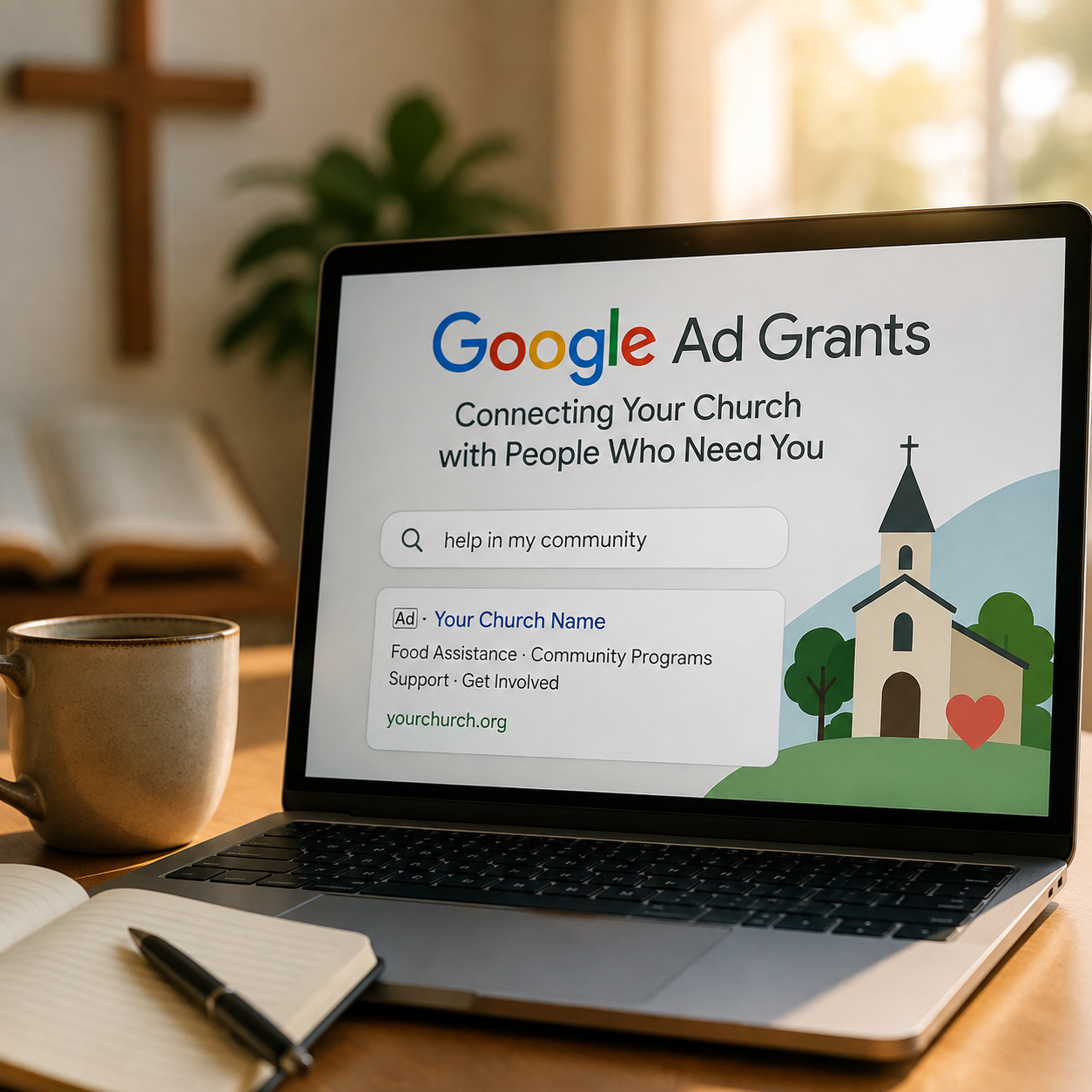
Every day, people in your community turn to Google to find food assistance, volunteer opportunities, local events, and spiritual support. Google Grants for churches can help your ministry appear in search results and reach people when they need help.
Eligible organizations can receive up to $10,000 each month in in-kind search advertising through the official Google Ad Grants program. Your church can use those ads to connect people with ministry programs, community resources, events, and ways to get involved.
The program offers churches a way to promote their services and outreach without using funds set aside for ministry expenses.
But approval is only the starting point. Your church needs the right nonprofit status, a strong website, focused campaigns, and consistent oversight. Learn how Google Ad Grants for churches work, who may qualify, and what responsible management looks like after activation.
What Are Google Grants for Churches?
The Google Ad Grants program gives eligible nonprofit organizations advertising credit for text-based ads on Google Search. Google currently provides up to $10,000 per month, and any unused credit does not roll over to the next month. Organizations do not need to spend the full amount to remain in the program from one month to the next.
Church ads can appear when someone searches for a phrase connected to your ministry. For example, a food pantry could promote a Thursday evening grocery pickup program, while a recovery ministry could invite people to a weekly group for families affected by addiction.
Unlike traditional grants, Google Ad Grants provide search visibility rather than funding for programs or operations. Access to Google grants for churches begins through Google for Nonprofits.
Can Churches Receive Google Ad Grants?
Yes, some churches can qualify. In the United States, Google requires IRS recognition of 501(c)(3) status or qualifying group exemption documentation under its country requirements. A church that is tax-exempt without an IRS determination letter may need to secure formal recognition before Google for Nonprofits will approve the request.
Churches that are covered by a parent organization's group exemption can still qualify if they document that relationship. Currently, fiscally sponsored organizations that don’t have their own 501(c)(3) status are ineligible.
So can churches receive Google Ad Grants as long as they have 501(c)(3) status? It depends. Beyond nonprofit status, Google Ad Grant eligibility includes operating in a supported country, completing nonprofit verification, accepting Google’s terms, and maintaining a website that meets program standards.
Before applying, review your church's records. Preparing commonly requested documents ahead of time can help avoid scrambling for information later.
How the Google Grants Application Works
A Google Grants application begins with Google for Nonprofits. First, your church will create or request access to an account, submit its nonprofit information, and complete verification through Google's validation partner.
After approval, your church can move into the Ad Grants setup process:
- Accept Google’s invitations to access the Ad Grants account and payments profile
- Choose ministry goals and the website pages you want to promote
- Build campaigns that follow Google’s program rules
- Set an appropriate daily budget
- Set up conversion tracking
- Review and publish the campaigns
Use the Ad Grants account Google provides rather than creating a separate paid Google Ads account. Although you'll accept a payments profile, approved organizations aren't charged for eligible Ad Grants advertising.
Your mission should match the programs described on your website. Exousia's mission and vision guidance can help your leaders describe why the church exists, whom it serves, and where its ministry is headed.
What Can Your Church Advertise?
Google Ads for churches work best when they connect a person's search with a specific resource or next step. Your campaigns should prioritize pages that give visitors useful information.
Ads can be used to promote events and programs like:
- Worship services, prayer gatherings, or Bible studies
- Food distributions, clothing closets, or meal programs
- Counseling, recovery, grief, or family support ministries
- Vacation Bible School, youth programs, or community events
- Volunteer positions and local service projects
- Preschool enrollment or programs operated by an eligible church organization
- Sermon videos, prayer requests, or newcomer information
- Online giving pages connected to a clear charitable purpose
Strengthen your church online outreach by aligning each keyword, ad, and landing page with the same ministry need so visitors immediately find the information they're seeking. Someone searching for food assistance should be able to reach a page with dates, location details, and contact instructions.
Churches developing new outreach programs need a clear planning process before they begin to advertise. Exousia’s organization tips can help your leaders turn a broad ministry idea into a specific program with goals, responsibilities, and a workable timeline.
What Makes Church Google Grants Effective?
Church Google Grants require more than an approved account. The best results come from focused search terms, helpful website pages, accurate tracking, and regular adjustments based on how people use the ads once they’re launched.
Start with the searches your audience might enter. A broad term such as “church” gives little context. Instead, phrases tied to a location, service, or need can reach people who are more likely to benefit from your services.
Your landing pages also need substantial, original content. Google expects participating organizations to own their domains, explain their mission, maintain working links, and provide a secure experience. A page with a short announcement and no clear next step may struggle to serve visitors or meet program standards.
Conversion tracking is an important part of the optimization process, as it shows what happens after a click, whether that’s an event registration, volunteer form, donation, phone call, or request for support. It helps your team identify which campaigns best serve ministry goals.
Faith-based digital marketing works best when it’s strongly rooted in stewardship and a mission-minded approach. Your church is using a valuable in-kind resource, so focus on campaigns that connect people with the ministry opportunities they need the most.
Why Some Church Campaigns Fall Short
Sometimes, accounts underperform because the church treats activation as the finish line. Proper Google Grants management requires regular reviews of policy compliance, targeted search terms, landing page and ad quality, and conversion data.
Overly broad keywords may accidentally target people seeking something unrelated to your church. Review the search phrases that trigger ads, pause campaigns that are poor matches, and add more specific language.
Sending traffic to weak pages is another common mistake. Before launching a campaign, make sure your landing page clearly explains the service, who can participate, where it happens, and what the visitor should do next. Your website should also work well on mobile devices and use secure HTTPS connections.
Churches can also lose momentum when a single volunteer is left in charge of every login and campaign decision. Create a shared record of account access, active campaigns, target audiences, conversion actions, and review dates. Good organization reduces confusion and helps preserve continuity when staff members or volunteers change over time.
Finally, monitor Google’s current compliance rules. Ad Grants accounts require active, accurate conversion tracking, and many accounts must maintain a monthly click-through rate of at least 5%. Google may temporarily deactivate accounts that fall out of compliance.
Should Your Church Manage the Account Internally?
Internal management works best when your church has someone with protected time, Google Ads knowledge, website access, and authority to coordinate with ministry leaders. That person should be able to assess performance each month and update campaigns as programs change.
Outside help may be a better fit when staff time is limited, volunteers change often, or compliance problems are a concern. Professional support can also connect advertising with a larger church digital marketing strategy.
Before hiring a provider, ask who will be responsible for creating landing pages, installing tracking tools, researching keywords, monitoring policies, and reporting results. Confirm how often the account will be reviewed. A well-defined scope will protect your budget and prevent gaps between advertising work and ministry decisions.
The same capacity questions apply when a church hires help for traditional funding. Before making that decision, consider how much of the grant process your team can realistically manage and where professional grant support would provide the most value.
How Google Ad Grants Fit a Wider Funding Plan
Can your Google Ad Grant work alongside more traditional grant programs? Absolutely.
A Google Ad Grant for churches supports search visibility. Traditional grants can pay approved program costs such as personnel, supplies, transportation, training, equipment, or facility improvements. Your church may benefit from both tools when each one serves a defined purpose.
For example, a foundation grant might fund a new youth mentoring program. Google Ad Grants could then help eligible families find the program, recruit mentors, or promote registration. The funding pays for delivery, while the advertising helps the ministry reach people who can participate.
Church marketing grants and nonprofit Google grants should fit your mission and staff capacity. Before expanding a campaign, confirm that program leaders have the time and attention to respond to inquiries, track participation, and protect personal information.
Build a funding plan that combines grants, individual giving, partnerships, and a realistic ministry budget instead of relying on grants alone. And as you grow, don't let common grant writing myths keep your church from applying for opportunities that fit your mission.
Turn Your Google Ad Grant Into Actual Ministry Impact
The available credit for Google grants for churches is substantial, yet its value depends on whether the ads connect people with services and opportunities that matter. Treat Google Ad Grants for nonprofits as an ongoing outreach resource with real administrative duties.
Church marketing and grant funding can also work together. One helps people find your ministry, while the other may provide resources to operate community programs.
Our team understands these demands from firsthand ministry experience. Exousia’s founders, Kevin and Dani Arthur, have spent decades in ministry and nonprofit administration, and they have used grant funding to support church programs such as food assistance, youth services, childcare, mental health initiatives, and community recreation.
At Exousia, we offer education, consultation, writing, and back-end grant support for churches and faith-based nonprofits that want a more consistent funding process.
When you contact our team, we invite you to share your ministry goals, current programs, and internal capacity. We can help you consider how advertising, traditional grants, and long-term funding plans can support the work your church has been called to do.
Next step
Reading is the easy part.
Bring us the deadline you are staring at. We will tell you plainly whether you are ready for it, and what it takes if you are not.
Start the ConversationFree 20-minute fit conversation