
Lilly Foundation Grants for Churches: A Guide
Lilly Endowment grants can be a powerful resource for churches—but the right opportunity starts with the right strategy. Learn how to identify eligible programs, build a strong ministry plan, and prepare your church to pursue funding with confidence.
By Exousia Team
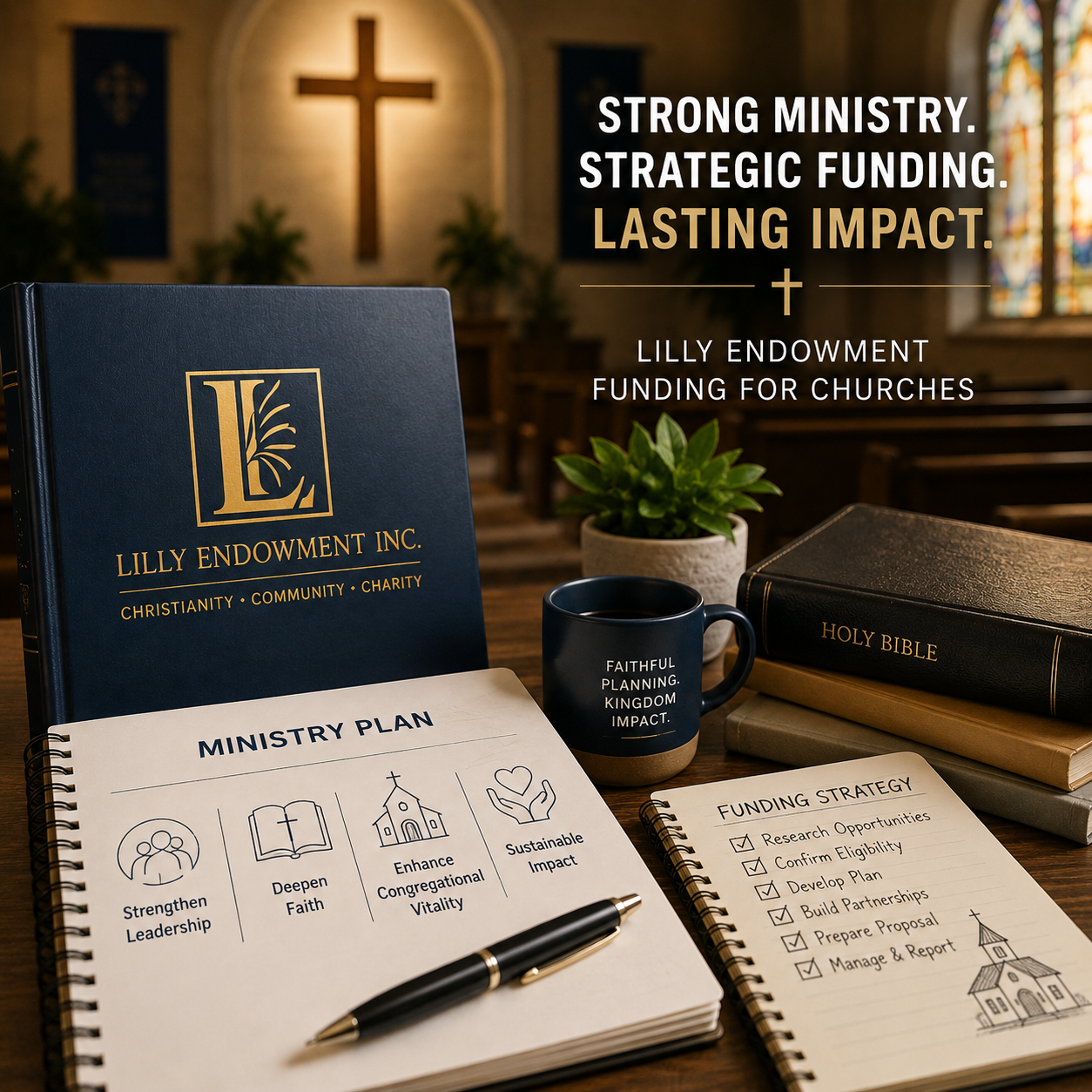
Lilly Endowment Inc. has a long record of supporting Christian faith, pastoral leadership, and congregational vitality. Lilly Foundation grants for churches can be significant, yet churches need a clear picture of how the Endowment works before they invest time in an application.
Lilly Endowment Inc. is a private foundation separate from Eli Lilly and Company. Its grantmaking reaches across the United States and supports work that strengthens Christian communities, religious institutions, and the leaders who serve them.
Exousia helps faith-based organizations assess funding opportunities like Lilly Endowment grants for churches and create an intentional strategy to pursue them responsibly.
How Lilly Endowment Funding Reaches Churches
While leaders may think of Lilly grants for churches as a single standing grant program, Lilly Endowment uses several paths to fund religious work. It may launch a competitive initiative, invite selected organizations to submit proposals, or fund a national or regional partner that serves congregations.
A church may therefore benefit from Lilly Foundation funding without receiving a direct award from the Endowment. A seminary, denominational body, ministry network, or faith-based nonprofit may receive a large grant and then offer training, services, or smaller awards to participating churches.
Start with the Endowment’s current initiatives and confirm whether the submission window is open. Exousia’s grant resources can help your team screen opportunities before it commits staff hours to a proposal.
What Does the Lilly Endowment Fund for Churches?
So what does the Lilly Endowment fund for churches? The Endowment’s priorities include:
- Strengthening pastoral leadership
- Deepening Christian faith and life
- Enhancing congregational vitality
- Supporting religious institutions and networks
- Improving public knowledge of religion
Past initiatives have supported clergy renewal, preaching, theological education, Christian parenting, children’s worship and prayer, storytelling, and programs that help congregations thrive. These examples show the range of church leadership grants and church innovation grants connected to the Endowment’s goals.
The Endowment’s major religion initiatives explain the purpose of each program and identify the organizations the Endowment seeks to support.
Before your team develops a proposal, review your church’s mission and vision. With this as your guidance, your project should connect directly to the stated purpose of the Endowment’s initiatives, sharing details on the people served, planned activities, and expected results.
Which Churches May Qualify?
Eligibility for Lilly Endowment church grants varies by initiative. Some programs allow congregations to apply directly, while others accept proposals from public charities, theological schools, denominations, colleges, ministry networks, or other religious organizations.
Because the Endowment’s grantmaking reaches organizations across the country, your team should review the requirements for each opportunity closely. Before moving forward, check:
- Eligible applicant type
- Tax status
- Location
- Partnership requirements
- Project dates
- Allowed expenses
Lilly Endowment grants for small churches may also be available through an intermediary organization, like a seminary, denomination, regional network, or funded nonprofit that manages a larger program for participating congregations. This can give smaller churches access to funding, training, or services without having to submit a direct proposal to Lilly Endowment.
Your review process should include the people who would help carry out and manage the project. Exousia works with ministry professionals across the church, including pastors, administrators, youth leaders, outreach staff, bookkeepers, and board members.
Bringing these roles into the conversation early can help your church decide whether it has the staff time, financial systems, and leadership support needed to complete the work. Our online learning modules cover program planning, funding research, proposal development, budgets, and grant management for church teams that want a shared process.
Strong Ministry Planning Comes Before Proposal Writing
A grant notice can create pressure to write quickly. Begin with the ministry need instead. Your church should be able to explain:
- Who will participate
- What challenge the project addresses
- How the program will operate
- What change the funding should support
Build a practical plan before assigning narrative sections. Define the activities, leadership roles, timeline, budget, partnerships, and ways you will track progress. A funder needs enough detail to see how the project will move from an idea to a working ministry.
What Can Weaken a Church’s Funding Request?
A large award may look appealing, but the project still needs a close match with the funder’s purpose and applicant rules.
Another problem appears when church leaders have different versions of the project. One person describes a leadership program, another plans a community outreach effort, and the budget includes costs that fall outside both descriptions. Resolve any differences before writing.
Applications also lose strength when they rely on broad claims. Replace statements such as “our community has great needs” with local data, ministry records, partner input, or clear examples that show who needs help and why the proposed approach fits.
Exousia can help you understand common grant myths so your church can approach each opportunity with clear, realistic expectations.
How Churches Can Prepare for Lilly Endowment Funding
If you’re researching how churches can prepare for Lilly Endowment funding, start by creating a document system early on. Gather current financial statements, annual budgets, leadership biographies, board information, tax records, policies, program reports, and partnership details.
Next, assign responsibility for each part of the process. The pastor or ministry director should approve the program plan, financial staff should verify every figure, and the board should complete any required authorization. One person should manage the schedule, document requests, revisions, and final submission.
Review new Lilly Endowment grant opportunities against a written checklist. Confirm eligibility first, then examine the purpose, award period, required activities, allowable costs, reporting duties, and review schedule.
Exousia can support your church through education, consultation, coaching, proposal development, and continued grant management, depending on how much help your team needs.
Build a Wider Ministry Funding Plan
Lilly Foundation church grants need to sit within a broader funding strategy. Faith-based foundation grants, Christian foundation grants, local giving programs, individual donors, and church fundraising can support needs that fall outside a Lilly initiative.
Your team can group ministry funding opportunities by project. A youth program may fit one set of funders, while food service, mental health support, or community recreation may call for different sources. Keep each request tied to a real program and budget.
Religious nonprofit grants also bring work after an award. Your church may need to track restricted expenses, document participation, report results, and maintain communication with the funder. Plan those duties before you accept funding.
Exousia’s partnerships include church-based work supported through Lilly Endowment initiatives. Our full-service approach can continue from research and proposal development into back-end management, giving church leaders one team across the grant cycle.
Preparing Your Church for the Right Opportunity
Lilly Foundation grants for churches can support meaningful Christian work when a ministry fits an active initiative. Careful research, a complete project plan, sound financial records, and active leadership give your church a stronger base for Lilly Endowment church grants and other church grant opportunities.
At Exousia, we provide education, consultation, proposal writing, submission assistance, and continued grant management for churches and faith-based nonprofits. Exousia’s founders, Kevin and Dani Arthur, bring 40 years of ministry, nonprofit administration, and education experience to this work.
When you contact our team, share your ministry goals. We can help you choose the level of education, writing, or continued grant support that fits the work ahead.
Next step
Reading is the easy part.
Bring us the deadline you are staring at. We will tell you plainly whether you are ready for it, and what it takes if you are not.
Start the ConversationFree 20-minute fit conversation