
Using a Research Subscription to Build a Lasting Funding Strategy
A single grant can fund a season of ministry. A research subscription is what keeps the funding coming after it ends — turning grant-seeking from a once-a-year scramble into a steady, always-current pipeline built for your church's long-term mission.
By Exousia Team
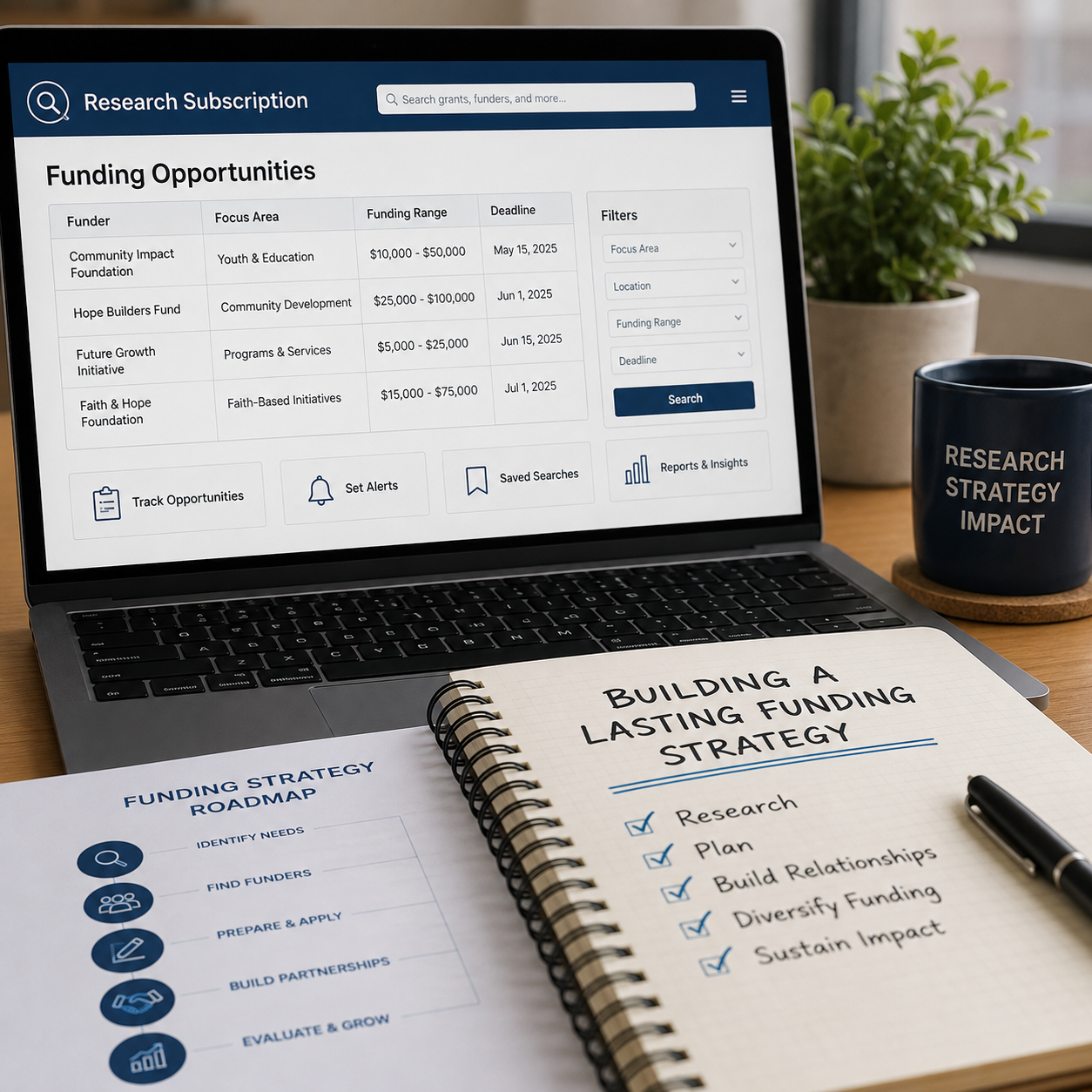
Your church lands a grant. The team celebrates, the program launches, and then the funding runs out a year later with no clear next step.
This is one of the most common patterns in church fundraising: a single win instead of a system. Without an ongoing process for finding new opportunities, even a well-run ministry program can stall the moment its original grant ends.
A grant research subscription solves that problem by treating funder research as a continuous discipline rather than a one-time project. Instead of scrambling to find a new opportunity each time a grant expires, your church receives a steady, organized pipeline of funding leads matched to its programs, geography, and eligibility.
The sections below explain what a research subscription is, how it works, and why it may be the missing piece in your church's long-term funding strategy.
What Is a Grant Research Subscription?
A grant research subscription is a recurring service in which a grant research provider continuously scans foundation, corporate, and government funding sources on your church's behalf and delivers a running list of matched opportunities on a set schedule, often monthly or quarterly.
Rather than researching one grant for one application, the subscription model builds an ongoing prospect list: funders whose priorities, geographic focus, and award history align with your church's programs.
Exousia's grant research services, for example, provide clients with standardized funder profiles covering eligibility, deadlines, award ranges, and application requirements, refreshed on a recurring basis rather than delivered as a single report.
This shifts funder research from a task your team repeats under deadline pressure to a resource your team can draw on whenever a new program need or funding gap appears.
Why a One-Time Grant Search Isn't a Strategy
Searching for grants only when a need becomes urgent tends to produce the same results: rushed applications, missed deadlines, and funders that turn out to be a poor fit once the details are reviewed.
A single search also has a short shelf life. Funder priorities shift, award cycles open and close, and new grant programs appear throughout the year. A prospect list built once and never revisited grows stale quickly, leaving your church working from outdated information the next time it needs to apply.
A lasting funding strategy depends on knowing what's available on an ongoing basis, not just what happened to be open the last time someone looked.
How a Research Subscription Supports a Lasting Funding Strategy
1. It Builds a Continuous Pipeline, Not a Single Lead
Instead of one grant at a time, a subscription keeps a rotating set of opportunities in view: some open now, some opening soon, some worth tracking for next year. That pipeline gives church leadership options and lead time instead of a single deadline to react to.
2. It Keeps Funder Research Current
Grant programs change their guidelines, funding amounts, and application windows from year to year. A subscription model checks funder websites and award announcements on a recurring basis, so your church is working from current information rather than a snapshot that may already be out of date.
3. It Matches Opportunities to Where Your Church Actually Is
A good research subscription doesn't just list every grant that mentions "nonprofit" or "faith-based." It filters for your church's specific geography, program areas, and eligibility, similar to the funder screening described in Exousia's guidance on evaluating grant opportunities before committing staff time to an application.
4. It Reduces Wasted Staff Time
Every hour your team spends investigating a grant that turns out to be a poor fit is an hour not spent on ministry work. A subscription front-loads that screening, so the opportunities that reach your desk have already been checked against your church's eligibility and program needs.
5. It Supports Planning, Not Just Applying
When your church can see upcoming funding cycles months in advance, it can plan around them: gathering the right financial records, refining a program budget, or building the community data a funder will expect. That advance notice is difficult to create when research only happens after a deadline is already close.
What a Grant Research Subscription Typically Includes
Subscription services vary by provider, but a well-structured one for churches and faith-based nonprofits generally includes:
- A recurring schedule for identifying new grant opportunities across foundation, corporate, and government sources
- Standardized funder profiles covering eligibility, deadlines, award amounts, and application requirements
- Screening for faith-based eligibility nuances, since some funders welcome religious organizations while placing limits on how funds may be used
- A running prospect list organized so your team can see what's open now and what's coming
- Coordination with your church's existing records, since well-matched opportunities are easier to pursue when financial statements, program budgets, and leadership information are already in order
Federal opportunities listed on Grants.gov, for instance, often require registration steps that are easier to complete when your church already knows a relevant funding window is approaching rather than discovering it days before the deadline.
Who Benefits Most From a Research Subscription
A research subscription tends to fit churches and ministries that:
- Run multiple community-serving programs and want funding options for more than one at a time
- Have already applied for grants successfully but struggle to keep the pipeline full once a grant ends
- Want to plan a program's growth across several years rather than fund it one grant cycle at a time
- Have limited internal staff time for ongoing funder research, even if they can manage the writing and submission themselves
- Are building toward a repeatable funding process, similar to the internal systems described in Exousia's guidance on when to hire a Christian grant writer
A subscription model can also work well alongside an internal team: staff members handle proposal writing and relationships, while the subscription keeps the prospect list current in the background.
Research Subscription vs. One-Time Grant Research
| One-Time Research | Research Subscription | |
| Timing | Requested per application | Ongoing, on a set schedule |
| Coverage | One opportunity or a short list | A continuously refreshed pipeline |
| Currency | A snapshot in time | Regularly updated as funder guidelines change |
| Planning value | Limited, reactive | Supports multi-year funding plans |
| Best fit | A single upcoming deadline | A church building a lasting funding strategy |
Both approaches have a place. A one-time search can be the right call for a single, well-defined opportunity. A subscription earns its value when your church wants funding to be an ongoing part of how it operates, not a project it revisits only when the need becomes urgent.
Building Your Church's Funding Strategy Around a Research Subscription
A subscription works best as part of a broader system, not as a replacement for one. Consider pairing it with:
- A document library of the records funders commonly request, so a new opportunity doesn't mean starting from scratch
- A grant calendar that tracks deadlines, reporting dates, and renewal windows
- A clear internal review process for deciding which matched opportunities to pursue
- Ongoing coordination between your research provider and whoever manages proposal writing and submission
Churches seeking to build this kind of system from the ground up can also draw on Exousia's online learning resources for developing internal grant management skills alongside professional research support.
Is a Research Subscription Right for Your Church Right Now?
A subscription tends to be premature if your church doesn't yet have a defined program or an agreed funding goal, since even the best-matched funder list is only useful once there's a project to fund. In that case, program planning or a one-time consultation may be the stronger first step.
Once your church has a program worth funding and simply needs a steady, reliable way to find funders that fit it, a research subscription can turn funder research from an occasional scramble into a dependable part of your ministry's operations.
Start Building a Lasting Funding Strategy
A single grant can fund a season of ministry work. A lasting funding strategy keeps that work going.
A grant research subscription gives your church a continuous, current view of the funders most likely to support its mission, so your team spends less time searching and more time serving.
Exousia offers ongoing grant research subscriptions, along with grant writing, consultation, and back-end support for churches and faith-based organizations.
Share your program, your markets, and your current funding goals with our team to see whether a research subscription fits your church's next funding step.
Next step
Reading is the easy part.
Bring us the deadline you are staring at. We will tell you plainly whether you are ready for it, and what it takes if you are not.
Start the ConversationFree 20-minute fit conversation